You did everything you were asked to do. You took the birth control they handed you before deployment. You pushed through the training environments, the heat, the chemicals, the sleep deprivation, the operational stress. You performed at the highest level your body could give for years.
And now you are home, your hormones are a mess, and the VA is telling you your labs are normal.
This post is not about assigning blame. It is about filling in an information gap that the military healthcare system has largely left unaddressed, and about helping female veterans with PCOS understand what may have happened to their hormonal health during service, why standard testing often misses it, and what questions deserve real answers.
The Birth Control Problem Nobody Talks About
Hormonal contraception has been routinely distributed to female service members, often strongly encouraged before and during deployment, as a practical measure to suppress menstrual cycles in field environments. The logic is understandable from an operational standpoint. The hormonal consequences for women with underlying PCOS or a predisposition to it are a different matter.
Hormonal birth control, particularly injectable forms like Depo-Provera, and long-term oral contraception, works by suppressing the hypothalamic-pituitary-ovarian (HPO) axis, the communication system between the brain and the ovaries. This suppression is the mechanism that prevents ovulation. What it also does is mask the hormonal patterns that would otherwise signal a problem.
A woman with underlying PCOS who is placed on hormonal contraception at 19 or 20 years old may spend her entire service career without knowing her hormones are dysregulated. Her cycles are suppressed. Her androgen levels are artificially modified. Her insulin patterns go unexamined. When she comes off contraception after getting out, sometimes years later, the HPO axis does not simply switch back on. Research has documented that the return of ovulation can take months, and for some women, considerably longer. For those with underlying PCOS, the rebound can involve a surge in androgens and a return of symptoms that were never addressed because they were never visible.
Beyond the suppression itself, research has documented that hormonal birth control can deplete specific nutrients that play a role in hormonal regulation: B6, B12, zinc, magnesium, and folate among them. These are not minor deficiencies. They affect the body's ability to manage cortisol, support thyroid function, regulate blood sugar, and produce and clear hormones properly. Years of depletion without replacement creates a nutritional baseline that compounds the hormonal challenges of coming off contraception.
"Hormonal birth control during service did not cause PCOS. But for women with an underlying predisposition, it may have masked the condition for years, and created a harder starting point for hormonal recovery."
What Deployment and Training Environments May Do to Hormones
The body does not distinguish between different types of threat. Sustained operational stress, whether from combat, training cycles, or the chronic low-grade pressure of military life, activates the HPA axis and keeps cortisol elevated. Research has studied the downstream effects of chronic cortisol elevation on hormonal health in women, and the findings are relevant for anyone trying to understand what years of service may have done to their endocrine system.
Chronically elevated cortisol affects insulin sensitivity, adrenal androgen production, and the pulsatile signaling of LH and FSH, the hormones that govern ovulation. For women with PCOS, who already tend to have disruptions in these systems, sustained cortisol load from military service may amplify an existing hormonal vulnerability in ways that do not become fully visible until after service ends.
Beyond stress, the physical environments of deployment and training involve exposures that are increasingly being studied for their effects on health. Burn pit exposure, toxic chemicals, extreme heat and altitude, and contaminated water sources are among the environmental factors that have been investigated in relation to health outcomes in veterans. The PACT Act acknowledged the seriousness of toxic exposure claims for veterans broadly. Research into the specific effects on women's endocrine function is ongoing, and female veterans experiencing hormonal symptoms they cannot explain deserve to have those concerns taken seriously rather than attributed to stress alone.
Sleep disruption adds another layer. Military service involves chronic sleep debt, early formation, rotating shifts, overnight operations, and the persistent low-level alertness that does not switch off even in rest periods. Sleep and cortisol have a direct feedback relationship. Poor sleep raises cortisol; elevated cortisol disrupts sleep. Over time, this cycle affects blood sugar regulation, androgen levels, and cycle regularity in ways that are not resolved simply by returning to a civilian sleep schedule.
No Labs Means No Baseline, And That Is a Serious Problem
Here is one of the most significant structural failures in how the military handles women's hormonal health: almost no one runs labs during service.
Standard military healthcare does not include routine hormonal panels for female service members. Fasting insulin, free testosterone, DHEA-S, LH and FSH, thyroid antibodies, these markers are not part of regular checkups. Which means a woman can spend four, eight, or twenty years in the military with an undiagnosed hormonal condition and have no documented record of where her hormones were when she entered service, how they changed across her career, or what the cumulative effects of her service environment actually looked like on a lab panel.
When she finally gets out and sits down with a VA provider who runs a standard workup, there is nothing to compare it to. The numbers may fall within the broad normal range while the actual hormonal pattern driving her symptoms remains untested and invisible. She gets told she is fine. She is not fine. But without a baseline and without the right markers, proving otherwise through the medical system is an uphill battle.
This is not a criticism of individual VA providers. The standard panel was not designed to catch what drives PCOS symptoms in women, particularly not the functional markers that reveal insulin resistance, adrenal androgen excess, or thyroid dysfunction at a subclinical level. It is a structural problem, and female veterans are among those most affected by it.
Fertility, The Question Deserves a Real Answer
If you are a female veteran with PCOS and you are thinking about your fertility, your concern is legitimate and it deserves more than reassurance that your labs look okay.
PCOS is the most common cause of ovulatory dysfunction in women of reproductive age. When you layer years of hormonal contraception use, chronic stress exposure, potential environmental toxins, and the absence of any baseline hormonal data on top of an existing PCOS predisposition, the picture becomes more complex, not necessarily hopeless, but genuinely more complicated than a standard workup is equipped to evaluate.
The good news is that fertility concerns related to PCOS are among the most workable hormonal challenges when the root cause is properly understood. Irregular or absent ovulation can often be supported through targeted interventions once the actual hormonal drivers are identified. But that requires knowing what those drivers are, which requires the right testing.
Fasting insulin and glucose together, free and total testosterone, DHEA-S, LH and FSH with ratios, a full thyroid panel, AMH, ferritin, and inflammatory markers give a far more complete picture than a standard panel. That picture determines which interventions are most relevant, and what timeline is realistic. Guessing without that data, or accepting a normal result on an incomplete panel, delays the kind of targeted support that actually moves the needle.
If fertility is a concern for you, the most important thing you can do right now is get the full picture. Not because the news will necessarily be bad, but because you cannot address what you have not measured, and early information creates the most options.
What You Are Owed
You served. You did what was asked of you. You were not warned about the hormonal consequences of years of military contraception use, environmental exposures, chronic stress, and zero hormonal baseline testing. That is not a failure of your discipline or your effort. It is a gap in the system that served you.
What you are owed now is real answers. Not a normal lab result on a panel that was never designed to find what you are looking for. Not being told it is stress or adjustment or age. A full picture of your hormonal health, a provider who understands both PCOS and the context of what your body went through during service, and a strategy built around what your labs actually show.
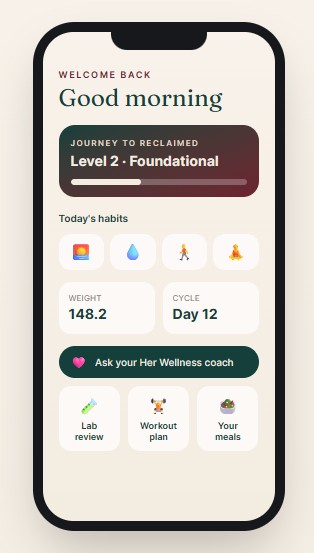
Her Wellness Reclaimed App
Real answers for women with PMOS who are tired of guessing.
Lab-based insight, a custom plan, and a real coach in your corner. Built for high-achieving women who have tried everything and still feel let down by their bodies.
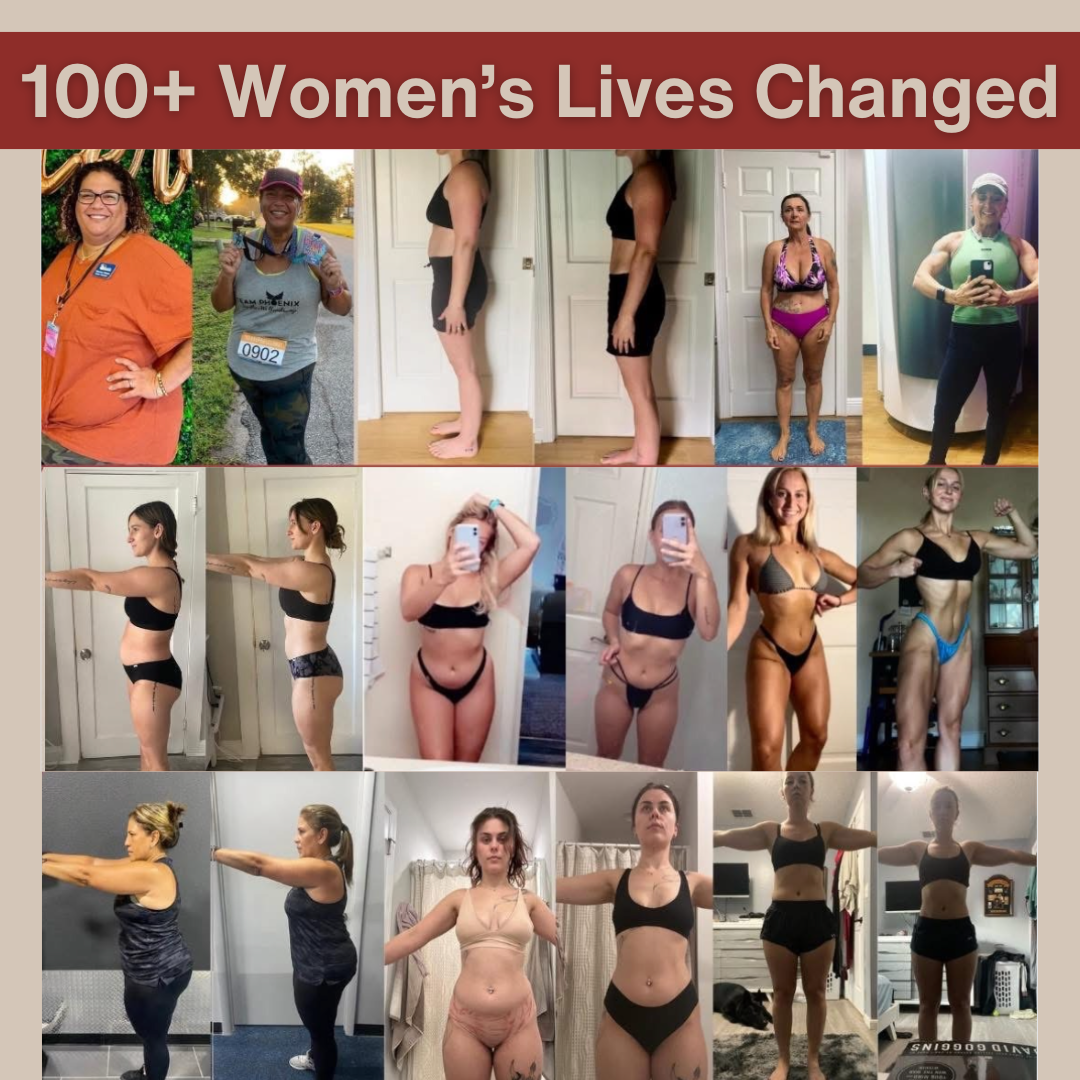
Are You Our Next Success Story?
Hundreds of women have joined our program. Apply now to see if you are a fit.
Click Here to ApplyMackenzie
Her Wellness Reclaimed
@herwellnessreclaimed
Disclaimer: This article is for educational and informational purposes only. It does not constitute medical advice, diagnosis, or treatment. Nothing in this post should be used as a substitute for professional medical guidance. Individual experiences vary significantly. References to research, including studies on birth control, environmental exposures, and hormonal health, are provided for general informational context only and do not imply that specific findings apply to any individual. Always consult a qualified and licensed healthcare provider before making any changes to your health care plan, medications, or treatment. If you are a veteran with health concerns related to toxic exposure, the VA's PACT Act resources and toxic exposure programs may provide additional support options.