You trained harder than most people will ever train. You deployed into environments that most people will never see. You operated under a level of sustained physical and psychological stress that does not have a civilian equivalent.
And now you are home, your body does not feel like your own, and nobody in the VA system seems particularly interested in connecting what your service environment did to your hormones with the symptoms you are living with today.
This post is for educational purposes only, it is not medical advice. But if you have been dismissed or told your labs look fine while dealing with weight gain you cannot explain, irregular cycles, fatigue, or other hormonal symptoms, understanding what deployment and military training may do to the female endocrine system is a conversation worth having.
The Cortisol Cascade, Why Stress Hits Women with PCOS Differently
The body has one primary response to threat: activate the HPA axis and release cortisol. It does not matter whether the stressor is a combat deployment, a 0500 PT formation, a weeks-long field exercise, or the persistent low-level pressure of military life. The hormonal response is the same. And when that response runs continuously for months or years, research has documented a range of downstream effects on hormonal health.
Chronically elevated cortisol affects insulin sensitivity. It drives adrenal androgen production. It disrupts the pulsatile release of LH and FSH, the hormones that govern ovulation. For women without any underlying hormonal condition, this may manifest as cycle irregularity or fatigue that resolves with rest. For women with PCOS or a predisposition to it, the same cortisol load is layered on top of hormonal systems that are already working harder than they should be. The result tends to be a significant amplification of symptoms that were already present or a triggering of symptoms that had not yet surfaced.
This is not a weakness. It is physiology. The discipline and performance capacity that made you exceptional in service ran on the same stress response system that governs your hormones. Understanding that is not a reason for self-blame, it is the starting point for understanding what your body actually needs now.
"The discipline that carried you through service ran on the same stress system that governs your hormones. Years of activation does not come without a biological cost, and that cost deserves a real evaluation."
High-Intensity Training and the Androgen Connection
Military fitness standards require high-output physical performance. Running, rucking, obstacle courses, and mandatory physical testing are not optional, and the culture of military fitness often rewards pushing harder regardless of how the body is responding. For women with PCOS, this creates a specific and underappreciated problem.
High-intensity exercise is a cortisol stressor. In the short term, that is manageable. When high-intensity training is sustained over years without adequate recovery, research has studied its relationship to chronically elevated cortisol, increased adrenal androgen output, and worsened insulin resistance in some women. In women with PCOS, where androgens and insulin resistance are already central to the hormonal picture, this compounding effect can drive symptom progression even in women who are otherwise performing at a high level.
The weight that does not move despite intense training. The fatigue that does not respond to rest. The cycle that becomes increasingly irregular despite no changes in diet or lifestyle. These are not signs of not trying hard enough. They are signs of a hormonal system that has been under sustained load without the targeted support it needed.
Environmental Exposures, What the Research Is Finding
Beyond stress and training, the physical environments of deployment and military service involve exposures that researchers are actively investigating for health impacts. Burn pit smoke, a mixture of combustion byproducts from open-air waste burning that was widespread in deployment locations, has been associated with respiratory, neurological, and systemic health concerns in veterans. The PACT Act, signed in 2022, formally acknowledged the legitimacy of toxic exposure claims and expanded VA benefits for affected veterans.
Research into the specific effects of these exposures on women's endocrine and reproductive health is ongoing and not yet fully characterized. What is known is that many of the compounds found in burn pit smoke and other military environmental exposures, heavy metals, volatile organic compounds, combustion particulates, have been studied in broader research contexts for their potential to disrupt endocrine function. The endocrine system is sensitive to chemical exposures in ways that other systems are not, and female veterans who experienced significant toxic exposure during service have legitimate grounds to pursue thorough evaluation of their hormonal health.
Sleep disruption adds another layer that is often overlooked in discussions of deployment health. Operational environments involve irregular sleep, overnight shifts, persistent alertness, and the kind of sleep debt that does not resolve with a few good nights after returning home. Sleep and cortisol have a direct feedback relationship, poor sleep raises cortisol, elevated cortisol disrupts sleep, and both together affect blood sugar regulation, androgen levels, and cycle regularity. For women with PCOS, this cycle is not just uncomfortable. It is a driver of the metabolic and hormonal patterns at the center of the condition.
What This Means for Women with PCOS
For a woman with PCOS, or an undiagnosed predisposition to it, military service creates a hormonal environment that stacks multiple major stressors on top of an already-sensitive system. Chronic cortisol from operational stress. Androgen amplification from sustained high-intensity training. Potential endocrine disruption from environmental exposures. Years of inadequate sleep. And on top of all of this, hormonal contraception that suppressed the symptoms that would otherwise have signaled a problem.
None of this is addressed in a standard VA workup. A fasting glucose and a basic hormone panel will not surface the functional markers that show what your hormonal system actually looks like after years of this environment. Fasting insulin, free testosterone, DHEA-S, a full LH and FSH picture, a complete thyroid panel, these are the markers that begin to reveal the actual picture. Without them, the result is a clean lab report and a body that still does not feel right.
You do not have to accept that as the final answer. Understanding what your service environment may have contributed to your hormonal picture is the first step. Getting the right testing done is the next one.
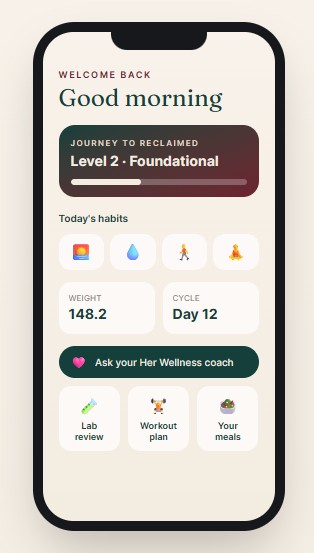
Her Wellness Reclaimed App
Real answers for women with PMOS who are tired of guessing.
Lab-based insight, a custom plan, and a real coach in your corner. Built for high-achieving women who have tried everything and still feel let down by their bodies.
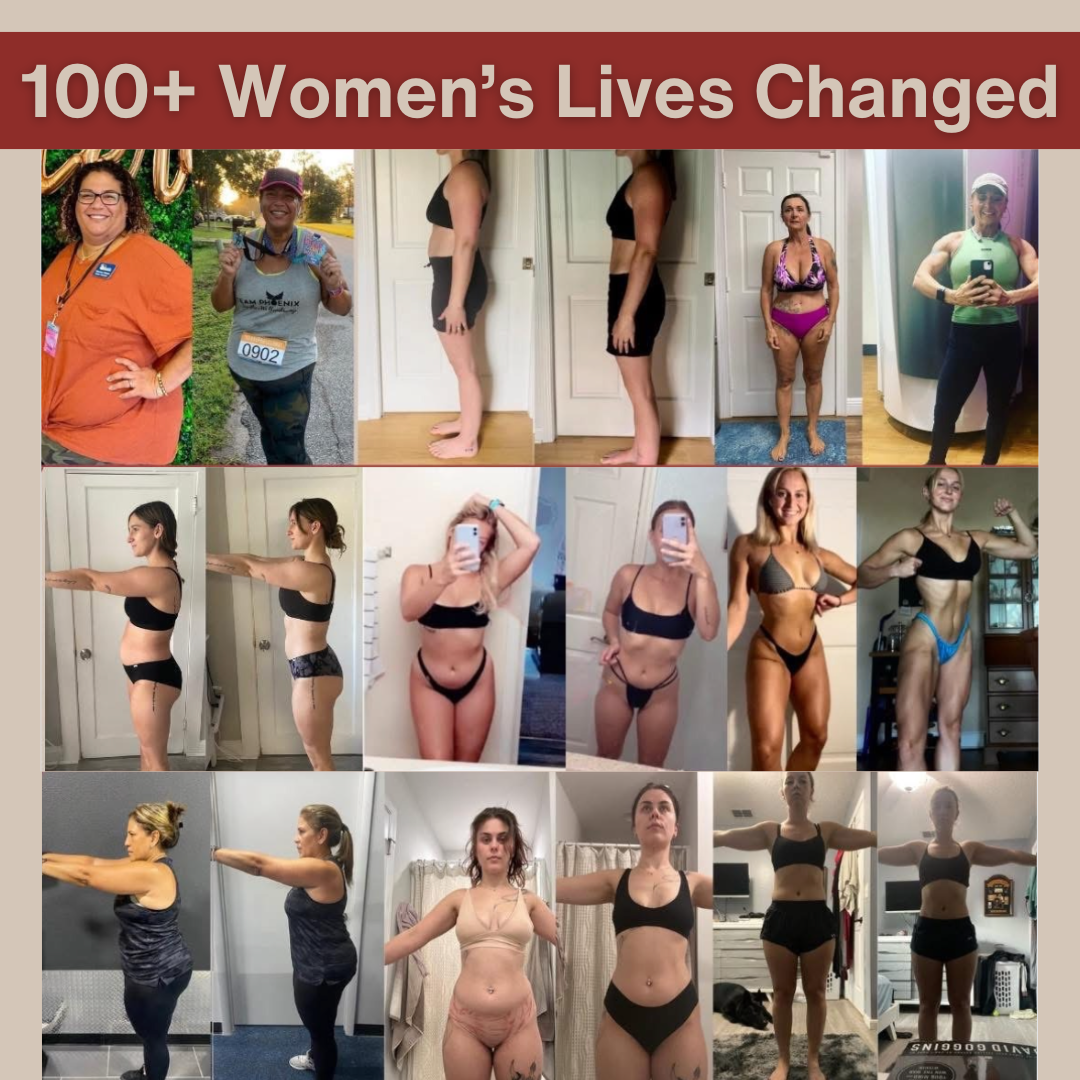
Are You Our Next Success Story?
Hundreds of women have joined our program. Apply now to see if you are a fit.
Click Here to ApplyMackenzie
Her Wellness Reclaimed
@herwellnessreclaimed
Disclaimer: This article is for educational and informational purposes only. It does not constitute medical advice, diagnosis, or treatment. References to research on cortisol, environmental exposures, and hormonal health are provided for general informational context and do not imply that specific findings apply to any individual. The PACT Act reference is factual and provided for informational purposes. Always consult a qualified and licensed healthcare provider before making changes to your health care plan. Female veterans with toxic exposure concerns should contact the VA directly regarding available screening and benefits programs.