You gave years of your life to service. You put your career, your body, and your future plans on hold in ways that most people never have to. And now that you are ready to think about starting or growing your family, you are running into questions that nobody in the military healthcare system ever prepared you for.
If you have PCOS and a history of military service, your fertility concerns deserve more than a standard workup and a reassurance that your numbers look fine. The combination of factors your body has been through, prolonged hormonal contraception, chronic operational stress, environmental exposures, and the complete absence of hormonal baseline testing during service, creates a genuinely more complex hormonal picture than civilian women with PCOS typically face.
This post is educational, not medical advice. But if you have been dismissed or left without real answers, understanding how these factors interact is the starting point for getting the evaluation your situation actually requires.
Why PCOS and Military Service Are a Compounding Challenge for Fertility
PCOS is the most common cause of ovulatory dysfunction in women of reproductive age. The central fertility challenge in PCOS is irregular or absent ovulation, the body is not reliably releasing eggs, which makes conception unpredictable and often difficult without targeted support.
Military service layers several additional hormonal stressors on top of that existing challenge. Each one individually would be worth addressing. Together, they create a hormonal picture that requires more careful evaluation than a standard fertility workup provides.
Prolonged hormonal contraception during service suppresses the hypothalamic-pituitary-ovarian axis, the system that governs ovulation. When contraception is stopped after years of suppression, that axis does not automatically reactivate on a predictable schedule. Research has documented that the return of ovulation can be significantly delayed, particularly with injectable contraceptives like Depo-Provera. For a woman whose HPO axis was already dysregulated by PCOS before contraception began, the recovery process may be slower and less predictable than for women without an underlying hormonal condition.
Chronic operational stress drives sustained cortisol elevation. Cortisol suppresses the pulsatile release of GnRH, the signal that triggers LH and FSH production, which in turn governs ovulation. Years of elevated cortisol from military service does not resolve simply because service ends. The HPA axis can take significant time to recalibrate, and during that recalibration period, ovulatory function remains disrupted.
"For a female veteran with PCOS, fertility is not just a PCOS question. It is a PCOS-plus-years-of-compounding-hormonal-stressors question. That requires a different level of evaluation than a standard panel provides."
The Role of Environmental Exposure
Researchers are actively investigating the relationship between toxic military exposures and reproductive health outcomes in female veterans. Burn pit smoke, contaminated water sources, industrial chemicals, and pesticide exposure during deployment have been documented through the PACT Act and are being studied for a range of health effects. Research into the specific impact on endocrine and reproductive function in women is ongoing.
What is known from broader endocrinology research is that the endocrine system is particularly sensitive to chemical exposures that interfere with hormonal signaling, a class of substances known as endocrine-disrupting compounds. Some of the compounds documented in military environmental exposures have been studied in this context. Female veterans with significant toxic exposure histories and unexplained reproductive health concerns have legitimate grounds to pursue thorough evaluation that considers this history alongside other factors.
The Baseline Problem, Why Starting From Zero Is Harder
One of the most significant challenges facing female veterans seeking fertility support is the absence of any hormonal baseline from their years of service. No fasting insulin recorded when they were 22. No testosterone or DHEA-S levels from the deployment years. No LH and FSH ratios from the period of heaviest training and stress.
This means that when a female veteran sits down with a reproductive endocrinologist or a fertility specialist today, the provider is working without historical context. They can see where the numbers are now. They cannot see how far those numbers have moved, how long the hormonal disruption has been in place, or what the trajectory has been. That missing context can affect both the accuracy of the assessment and the timeline of treatment expectations.
Getting a comprehensive panel now, even without historical comparison points, is still far better than relying on a standard workup. Fasting insulin, free and total testosterone, DHEA-S, LH and FSH with ratios, AMH, a full thyroid panel, ferritin, and inflammatory markers together give a starting picture that is meaningful even without a baseline. That picture tells you where the hormonal system is today and what the most relevant intervention points are.
What Actually Helps, And What the Timeline Looks Like
The most important thing to understand about fertility and PCOS after military service is that the picture is complex but not hopeless. PCOS-related ovulatory dysfunction is among the most workable fertility challenges when the root cause is properly understood. The military service factors, the contraception history, the cortisol load, the potential exposures, add complexity, but they do not make the situation unaddressable.
What they do require is a more thorough starting evaluation and more realistic expectations about timelines. Hormonal recovery after years of suppression and chronic stress does not happen in weeks. For some women, rebuilding the hormonal foundation that supports regular ovulation takes months of targeted nutritional, lifestyle, and sometimes medical support. That is not a failure, it is biology responding to the reality of what the body has been through.
The approach that tends to be most effective starts with the labs. Once the full hormonal picture is clear, what the insulin pattern looks like, where androgens are, how the thyroid is functioning, what AMH suggests about ovarian reserve, the interventions become specific rather than generic. Insulin sensitization strategies if insulin resistance is present. Cortisol support if the HPA axis is still dysregulated. Nutritional repletion if contraception-driven deficiencies are affecting the hormonal recovery process. And movement and recovery protocols that support rather than further stress a hormonal system that has been under load for years.
If fertility is your goal, the most important thing you can do right now is get the full picture. Early information creates the most options. Waiting, or accepting a clean result on an incomplete panel, delays the kind of targeted support that actually makes a difference.
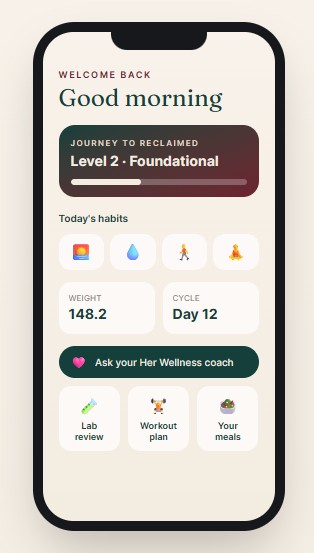
Her Wellness Reclaimed App
Real answers for women with PMOS who are tired of guessing.
Lab-based insight, a custom plan, and a real coach in your corner. Built for high-achieving women who have tried everything and still feel let down by their bodies.
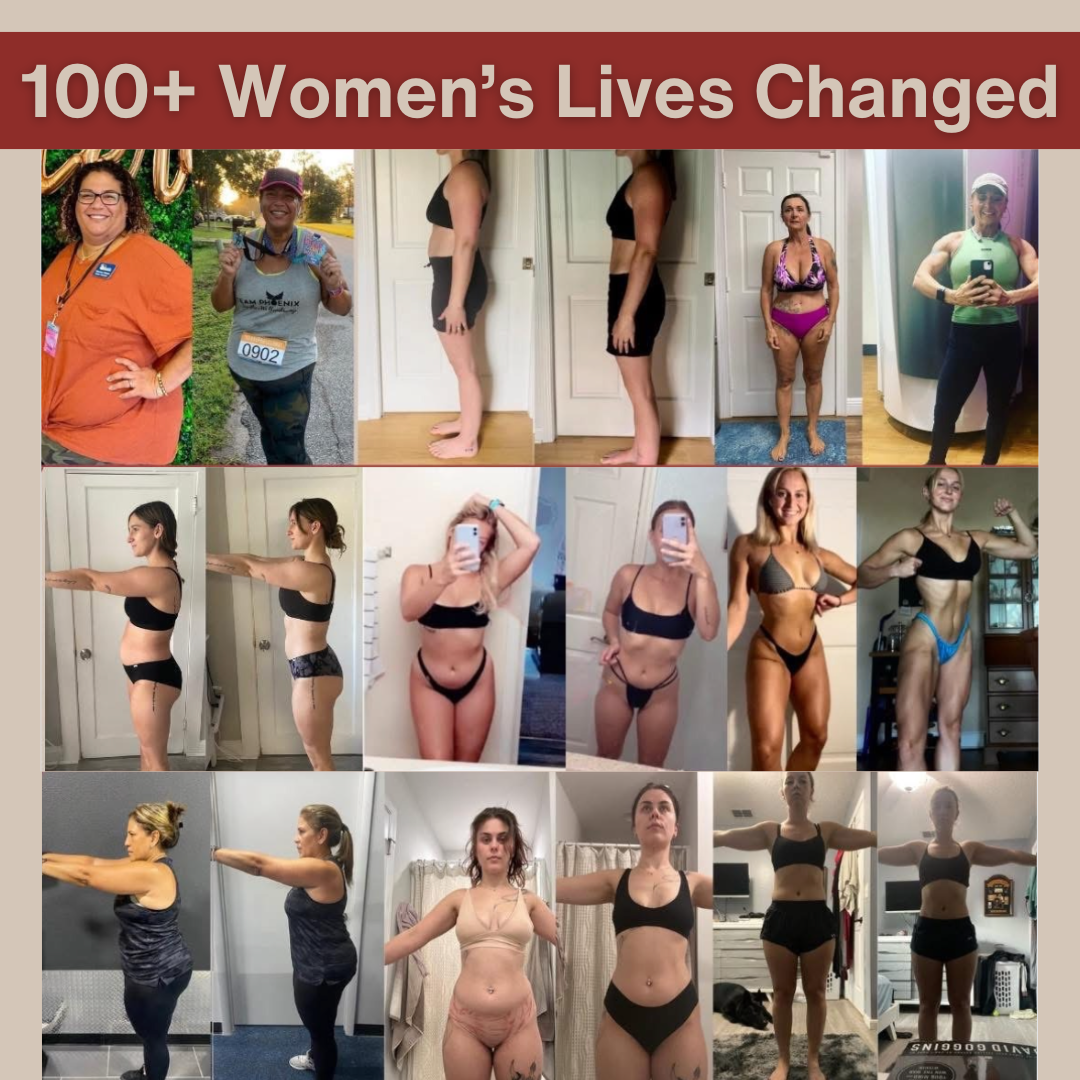
Are You Our Next Success Story?
Hundreds of women have joined our program. Apply now to see if you are a fit.
Click Here to ApplyMackenzie
Her Wellness Reclaimed
@herwellnessreclaimed
Disclaimer: This article is for educational and informational purposes only. It does not constitute medical advice, diagnosis, or treatment, and nothing in this post should be used as a substitute for professional medical or reproductive health guidance. Individual experiences vary significantly. References to research on PCOS, hormonal contraception, military exposures, and reproductive health are provided for general informational context only and do not imply that specific findings apply to any individual. Female veterans with fertility concerns should consult with a qualified reproductive endocrinologist or healthcare provider familiar with their full medical history. Always consult a licensed healthcare professional before making changes to your health care plan.