When you enlisted, the military tracked everything. Your physical fitness scores. Your weight. Your vision. Your hearing. Your readiness status at every stage of your career.
The one thing they almost never tracked was your hormones.
Not your fasting insulin. Not your free testosterone. Not your LH and FSH ratios. Not your DHEA-S or your thyroid function. For most female service members, routine hormonal testing was never part of the picture, which means that years of hormonal dysfunction could go completely undetected, and when symptoms finally emerge after service, there is nothing to compare current labs against.
This is not a minor oversight. For women with PCOS or an underlying predisposition to it, the absence of any hormonal baseline during service is one of the most significant barriers to getting real answers after leaving.
What Military Healthcare Was Built For, And What It Missed
Military medicine was designed around operational readiness. The primary question it asks is whether a service member can perform their duties. Hormonal health, particularly the kind of functional hormonal evaluation that reveals conditions like PCOS at a root-cause level, was not a design priority in a system built largely around a male population and an operational medicine framework.
Standard military checkups include blood pressure, cholesterol, blood glucose, complete blood count, and basic metabolic markers. These are useful. They are not useful for detecting PCOS, subclinical thyroid dysfunction, insulin resistance, adrenal androgen excess, or the kind of LH and FSH disruption that drives cycle irregularity and infertility in women with hormonal conditions.
A female service member with PCOS could go through an entire military career, four years, eight years, twenty years, with labs that come back within normal range at every single checkup. Not because her hormones were fine, but because the right markers were never ordered. The dysfunction was invisible to the system she was in.
Why No Baseline Makes Everything Harder After Service
When you leave the military and start experiencing symptoms, weight that does not respond to effort, irregular or absent cycles, fatigue, facial hair, acne, or mood changes, the first place most veterans turn is the VA. And the VA runs a standard lab panel.
That panel comes back normal. And because there is no record of where your hormones were at 22, or 28, or 35 during the years you were serving, the provider has no way to see what has changed. The result is treated as reassuring. But a normal result on the wrong panel is not the same as a clean bill of health.
Without a baseline, there is also no way to document the trajectory. Whether your testosterone has been climbing for years. Whether your fasting insulin was already elevated during service and has continued to rise. Whether the cortisol disruption from your deployments left a hormonal signature that is still affecting your insulin sensitivity and androgen levels years later. All of that history is simply missing, because no one was recording it.
"A normal result on the wrong test is not the same as a clean bill of health. Without the right markers and without a baseline to compare against, the system is not finding anything, because it is not looking."
What the VA Standard Panel Misses
Standard VA labs for women presenting with fatigue, weight gain, or cycle irregularity typically include thyroid-stimulating hormone (TSH), a complete blood count, and a basic metabolic panel. These cover a narrow slice of the hormonal picture.
What they do not include, and what matters most for a thorough PCOS evaluation, are the functional markers that reveal how the hormonal system is actually operating:
- Fasting insulin alongside fasting glucose, because insulin resistance can be present with a completely normal fasting glucose
- Free testosterone, because total testosterone can appear normal while the biologically active fraction is elevated
- DHEA-S, which reflects adrenal androgen output and is elevated in a significant subset of PCOS cases
- LH and FSH with ratios, which reveal the brain-to-ovary signaling disruption that drives anovulation in PCOS
- Free T3 and T4 alongside TSH, because TSH alone can appear normal while thyroid function is impaired
- Ferritin, because iron deficiency is common in women and affects energy, thyroid function, and hormonal processing
- Inflammatory markers, because chronic inflammation is both a driver and a consequence of PCOS hormonal disruption
None of these are exotic or experimental markers. They are used routinely by functional health practitioners working with PCOS. They are simply not part of what the VA standard panel orders by default.
What to Do With This Information
The absence of a hormonal baseline from service cannot be changed. But it does not have to remain a barrier. Getting a comprehensive panel now, one that includes the markers above, creates a starting point. It gives you actual data to work from. And in many cases, that data reveals patterns that have been present for a long time and simply were not visible on the tests that were being run.
You can ask your VA provider to order expanded testing and explain which markers you are requesting and why. You can also seek evaluation from a specialist outside the VA system who is familiar with PCOS and women's hormonal health. The two are not mutually exclusive, many female veterans work with both.
What matters is getting a complete picture rather than accepting a reassuring result on an incomplete panel. You spent your career operating with precision. Your health deserves the same standard.
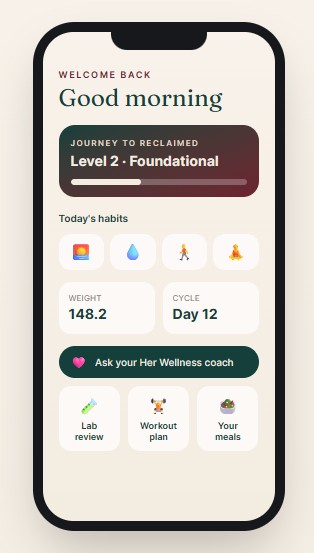
Her Wellness Reclaimed App
Real answers for women with PMOS who are tired of guessing.
Lab-based insight, a custom plan, and a real coach in your corner. Built for high-achieving women who have tried everything and still feel let down by their bodies.
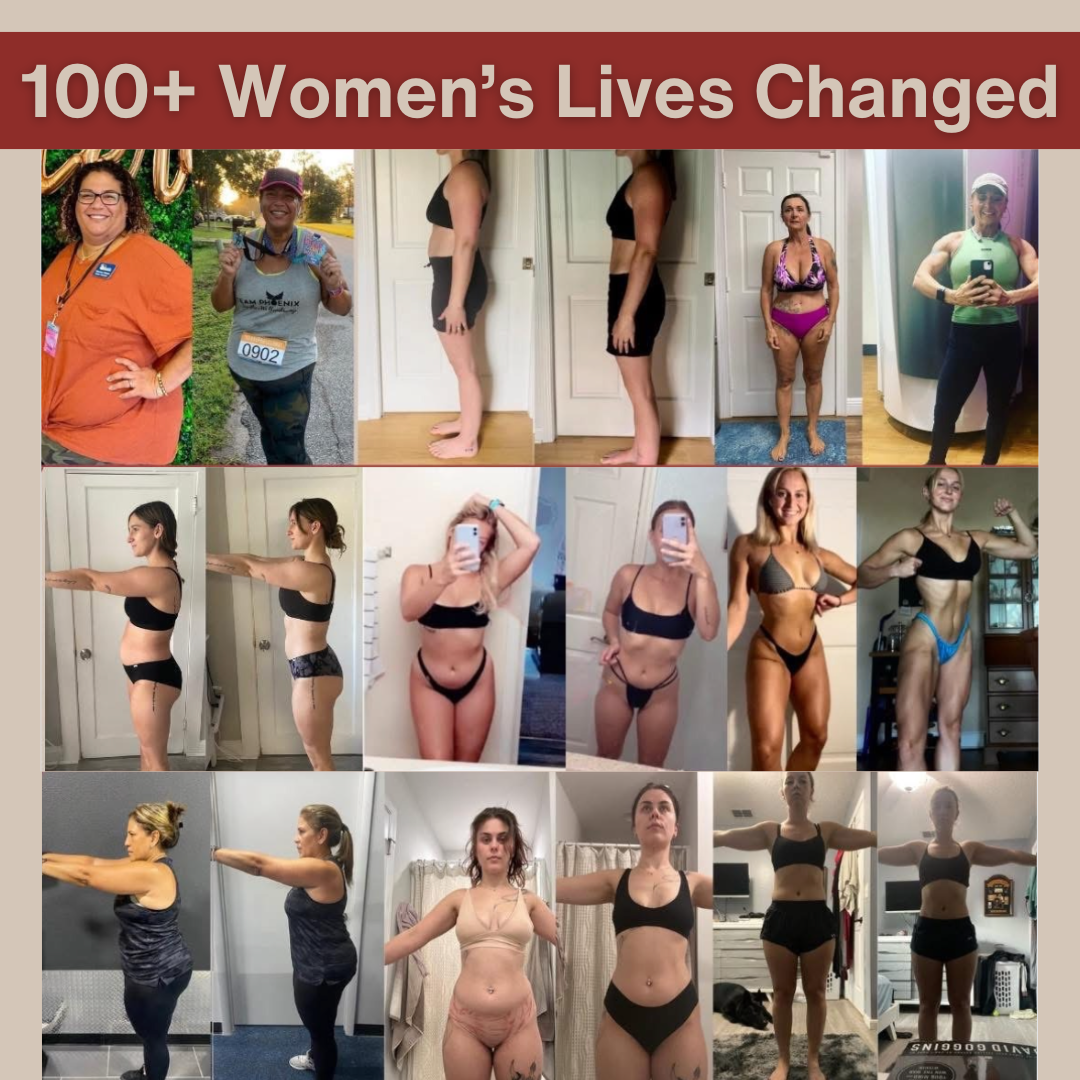
Are You Our Next Success Story?
Hundreds of women have joined our program. Apply now to see if you are a fit.
Click Here to ApplyMackenzie
Her Wellness Reclaimed
@herwellnessreclaimed
Disclaimer: This article is for educational and informational purposes only. It does not constitute medical advice, diagnosis, or treatment. Nothing in this post should be used as a substitute for professional medical guidance. The lab markers described are provided for educational context only and do not represent a prescribed testing protocol. Always consult a qualified and licensed healthcare provider before making changes to your health care plan or requesting specific tests. Individual experiences and healthcare needs vary significantly.