You have spent years being told your labs are normal. You have been handed a birth control pill, maybe a metformin prescription, and sent home with a diagnosis that never quite explained what was happening in your body. Today, the medical world officially acknowledged something many women with PCOS have suspected for a long time. The name was wrong from the start.
As of May 12, 2026, PCOS has a new name. It is now officially called PMOS: Polyendocrine Metabolic Ovarian Syndrome. Published in The Lancet and backed by 14 years of research and over 22,000 women surveyed, this is not a rebrand. It is a correction. And it changes everything about how this condition should be understood, diagnosed, and treated.
Why PCOS Was Renamed to PMOS
The renaming process was driven by one core problem: the old name was clinically inaccurate and it was causing harm. Polycystic Ovary Syndrome implied the condition originated in the ovaries and was defined by cysts. Both assumptions were wrong.
The new name was published following a 14-year global consensus process involving more than 22,000 women surveyed and over 50 patient and professional organizations, including the Endocrine Society. The full transition to PMOS is expected to be adopted in the 2028 international guideline update, but the name is official today.
"The name polycystic ovary syndrome is inaccurate, implying pathological ovarian cysts, obscuring diverse endocrine and metabolic features, and contributing to delayed diagnosis, fragmented care, and stigma."
What PMOS Actually Stands For
Break the new name down and it tells the whole story of what is actually happening in your body.
Why the Old Name Caused So Much Harm
Polycystic Ovary Syndrome pointed doctors at the wrong organ. If your ultrasound looked unremarkable, you were told you probably did not have PCOS. If your hormones were borderline, you were dismissed. The name created a checklist that missed the majority of women living with this condition.
The cysts that show up on ultrasound are actually immature follicles. They are a symptom of hormonal disruption, not the cause of it. Research has shown this for years. The ovaries were never the origin of the problem. They were showing the effects of a deeper metabolic and endocrine dysfunction that the name never captured.
This is why so many high-achieving, disciplined women spent years being told their labs were normal. The wrong thing was being measured.
Why Generic PCOS Advice Has Always Failed You
When the diagnosis was framed as an ovarian problem, the treatment targeted the ovaries. Birth control pills to regulate cycles. Spironolactone to block androgens. These manage symptoms. They do not touch the root cause.
If insulin resistance is driving elevated androgens, which it does in the majority of cases, suppressing the androgen with a pill does not fix the insulin problem. The moment you stop the pill, the symptoms return. Often worse. This is not a personal failure. This is what happens when you treat the wrong target.
The standard diet advice fails for the same reason. High-intensity exercise spikes cortisol, and elevated cortisol worsens insulin resistance. Calorie restriction without addressing blood sugar stability increases stress hormones and slows metabolic function. You were not doing it wrong. The advice was not built for your hormones.
What Actually Works to Treat PMOS
The name changed. The root causes did not. What needs to be addressed is the same as it always was, now with greater clinical clarity around why.
Insulin Sensitivity Is the Foundation
Stabilizing blood sugar through strategic eating is one of the most powerful levers you have. Protein and fiber first, carbohydrates timed around movement, no skipping meals. These habits directly impact androgen levels, cycle regularity, and body composition because they address the metabolic driver that the new name finally acknowledges.
Get the Right Labs Done
Androgen excess needs to be addressed at the source, and that means understanding what is driving it. The standard labs your doctor orders are not enough. You need fasting insulin, free testosterone, DHEA-S, a full thyroid panel, and ferritin at minimum. You cannot fix what you cannot see, and most women with PMOS have never had these numbers looked at properly.
- Fasting insulin reveals insulin resistance before blood sugar becomes abnormal
- Free testosterone shows androgen excess that a standard hormone panel often misses
- DHEA-S identifies adrenal-driven androgen excess versus ovarian-driven
- Full thyroid panel catches subclinical thyroid dysfunction that mimics and worsens PMOS
- Ferritin is frequently low in women with PMOS and directly affects energy and metabolism
Cortisol and Inflammation Are Not Optional
Chronic inflammation is a documented feature of PMOS. Cortisol dysregulation is almost universally present in women who have been overtraining, under-eating, or running on stress for years. These are not soft wellness concepts. They are measurable drivers of the same androgen excess and insulin resistance that define this condition. Dialing back intensity, protecting sleep, and rebuilding the stress response is clinical for this population, not optional.
Frequently Asked Questions About the PCOS Name Change
What is PMOS?
PMOS stands for Polyendocrine Metabolic Ovarian Syndrome. It is the new official name for what was previously called PCOS, published in The Lancet on May 12, 2026, following a 14-year global consensus process.
Why did PCOS change its name to PMOS?
The old name was clinically inaccurate. Most women with PCOS do not have ovarian cysts, and the condition is driven by metabolic and multi-hormonal dysfunction, not an ovarian problem. The new name better reflects what is actually happening in the body and should reduce the misdiagnosis and dismissal that millions of women have experienced.
Is PCOS now called PMOS?
Yes. As of May 12, 2026, the global medical consensus officially renamed PCOS to PMOS. The full transition is expected to be complete with the 2028 international guideline update, but the name is official now.
Does the name change affect treatment?
The root causes remain the same: insulin resistance, androgen excess, inflammation, and cortisol dysregulation. The name change should improve diagnosis accuracy and reduce the number of women dismissed because their ovaries looked normal on ultrasound. Treatment should always be based on what is actually driving your individual symptoms, not a generic protocol.
What is the difference between PCOS and PMOS?
PMOS is the new, more accurate name for PCOS. The underlying condition is the same. The difference is that PMOS correctly frames it as a multi-hormonal and metabolic condition rather than an ovarian disorder, which should lead to better diagnosis, less dismissal, and more targeted treatment.
Knowing what is wrong and fixing it are two different things. A name change means more doctors will start connecting the dots and more women will stop being dismissed. But it does not tell you what is specifically driving your symptoms or give you a plan built around your body.
This article is for educational purposes only and does not constitute medical advice. Please consult a qualified healthcare provider before making changes to your nutrition, exercise, or supplement routine.
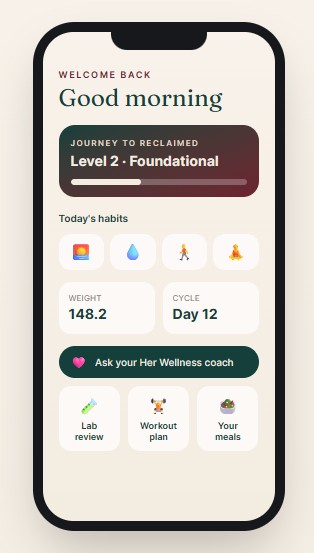
Her Wellness Reclaimed App
Real answers for women with PMOS who are tired of guessing.
Lab-based insight, a custom plan, and a real coach in your corner. Built for high-achieving women who have tried everything and still feel let down by their bodies.

Are You Our Next Success Story?
Hundreds of women have joined our program. Apply now to see if you are a fit.
Click Here to Apply