You're successful. You're disciplined. You've done the therapy, read the books, tried the breathwork. And your anxiety still shows up uninvited racing thoughts at 2am, a low hum of dread that follows you through your day, emotional swings that don't match what's actually happening in your life.
If you also have PMOS, this is not a coincidence. And it is not a character flaw. It is biology. Research consistently shows that women with PMOS are significantly more likely to experience anxiety and depression than women without it not because of how they think, but because of what their hormones are doing to their brain chemistry every single day.
This post is educational and not a substitute for mental health care or medical advice. But understanding the hormonal roots of anxiety in PMOS may be the most important thing nobody has ever explained to you.
Why PMOS and Anxiety Are Biologically Connected
PMOS is not just a reproductive condition. It is a whole-body metabolic and endocrine disorder that affects every system, including your brain. There are several specific hormonal mechanisms that create anxiety in women with PMOS, and most of them are never discussed at a standard appointment.
Blood Sugar Instability Mimics an Anxiety Attack
Insulin resistance the core metabolic driver of PMOS creates chronic blood sugar instability. When blood sugar drops too fast or falls too low, your body releases cortisol and adrenaline to compensate. Those are the same stress hormones that produce anxiety symptoms: racing heart, tight chest, shallow breathing, the feeling that something is wrong even when nothing obviously is.
For women with PMOS, this can happen multiple times per day. Every blood sugar crash is a hormonal anxiety trigger. And because it is physiological, no amount of cognitive reframing or deep breathing will stop it from happening the next time your blood sugar drops.
"If your anxiety spikes when you haven't eaten, a few hours after a carb-heavy meal, or in the afternoon before dinner that is your blood sugar talking. Not your nervous system being broken."
Chronic Cortisol Keeps Your Nervous System in Overdrive
Women with PMOS often have dysregulated cortisol patterns. Cortisol is supposed to peak in the morning, help you wake up and focus, then taper off through the day. When cortisol rhythms are disrupted which research shows is common in PMOS you can end up with elevated cortisol at night (wired but tired, can't switch off), blunted cortisol in the morning (can't get going), or chronically high cortisol throughout the day.
Chronically elevated cortisol keeps your brain's threat-detection system, the amygdala, in a state of heightened activation. This is the physiological definition of anxiety. Your brain is not broken. It is responding appropriately to a hormonal environment that is signaling danger on a continuous loop.
Low Progesterone Removes Your Natural Calming Signal
Progesterone has a natural calming effect on the brain. It binds to GABA receptors the same receptors targeted by anti-anxiety medications and produces a quieting, settling effect on the nervous system. Women with PMOS commonly have low progesterone, often because irregular ovulation or anovulation means the corpus luteum never forms to produce it.
When progesterone is chronically low, you lose a significant source of natural calm. The second half of your cycle, which should feel more settled and grounded once progesterone rises, instead feels just as activated or worse than the first half. Many women with PMOS describe having virtually no relief from anxiety throughout their cycle. This is why.
Inflammation Directly Affects Brain Chemistry
Chronic low-grade inflammation is one of the defining features of PMOS. Research has shown a clear link between systemic inflammation and both anxiety and depression inflammation affects neurotransmitter production, including serotonin and dopamine, and disrupts the brain-gut axis in ways that compound mood dysregulation.
For women with PMOS, inflammation is often driven by insulin resistance, poor gut health, and elevated androgens. Reducing inflammation through root-cause treatment is not just a metabolic goal. It directly affects how your brain functions and how safe your nervous system feels on a daily basis.
Why "Just Manage Your Stress" Doesn't Work
The standard advice for anxiety meditate, reduce stress, practice mindfulness is not wrong. But it is incomplete for women with PMOS, because it treats the mental symptoms while ignoring the hormonal cause.
You can meditate every morning and still have anxiety driven by blood sugar crashes at 3pm. You can go to therapy and still feel wired at 11pm because your cortisol pattern is inverted. You can practice gratitude and still feel a low hum of dread because your progesterone is at the floor.
These approaches are supportive tools. They are not a substitute for addressing what your hormones are actually doing.
What Actually Moves the Needle for PMOS Anxiety
Because PMOS anxiety has multiple hormonal roots, the most effective approach addresses several levers at once. This is not medical advice but this is what the research supports and what we see make a meaningful difference for women with PMOS.
Stabilize Blood Sugar First
This is the single most immediate lever for anxiety in PMOS. Eating protein and fat at every meal and never going more than 4 to 5 hours without eating reduces the frequency and severity of blood sugar-driven anxiety spikes dramatically for many women. A protein-first breakfast within 60 to 90 minutes of waking is particularly impactful for cortisol regulation and morning anxiety.
Reduce the Cortisol Load
High-intensity exercise adds to cortisol. So does chronic under-eating, excessive caffeine, poor sleep, and ongoing life pressure with no recovery built in. For women with PMOS whose cortisol is already dysregulated, layering on more cortisol inputs worsens anxiety meaningfully. Walking and strength training support cortisol without spiking it further. Reducing caffeine, especially after noon, removes a direct cortisol trigger. Protecting sleep is not optional it is a hormonal intervention.
Support Progesterone Through Cycle Regularity
Regular ovulation is the only way your body produces meaningful progesterone. The strategies that support ovulation in PMOS reducing insulin resistance, managing cortisol, supporting thyroid function are the same strategies that support progesterone. More regular cycles often mean more consistent progesterone production and, for many women, a noticeable shift in their baseline anxiety level.
Address Magnesium
Magnesium deficiency is extremely common in women with PMOS partly because insulin resistance depletes magnesium, and partly because chronic stress accelerates magnesium loss. Magnesium plays a direct role in GABA function, the same calming pathway as progesterone. Many women with PMOS who add magnesium glycinate report meaningful improvements in sleep quality, muscle tension, and anxiety. This is worth discussing with your healthcare provider before supplementing.
Know Your Specific Picture
The hormonal drivers of anxiety vary between individuals with PMOS. For some women, blood sugar instability is the dominant factor. For others, it is cortisol dysregulation, low progesterone, thyroid dysfunction, or chronic inflammation. Without functional lab testing that looks at your specific hormone and metabolic picture, you are making educated guesses about which levers have the most leverage for you.
This is what root-cause PMOS care is designed to do identify which systems are most disrupted for your body specifically, and build a strategy around that data rather than around generic protocol.
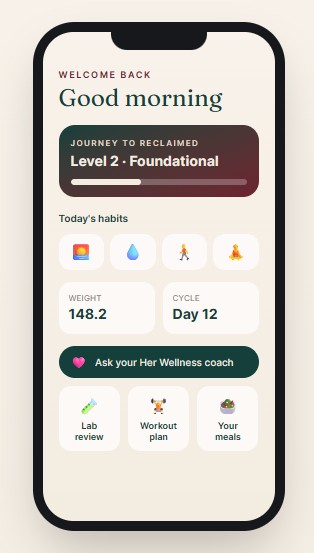
Her Wellness Reclaimed App
Real answers for women with PMOS who are tired of guessing.
Lab-based insight, a custom plan, and a real coach in your corner. Built for high-achieving women who have tried everything and still feel let down by their bodies.

Are You Our Next Success Story?
Hundreds of women have joined our program. Apply now to see if you are a fit.
Click Here to ApplyMackenzie
Her Wellness Reclaimed
@herwellnessreclaimed
Disclaimer: This post is for educational purposes only and does not constitute medical advice, diagnosis, or treatment. If you are experiencing anxiety or mental health symptoms, please speak with a qualified healthcare provider. The information shared here is intended to support informed conversations with your care team, not replace professional mental health or medical guidance.